A Sustainable Future for Worldwide Shipping and Ports
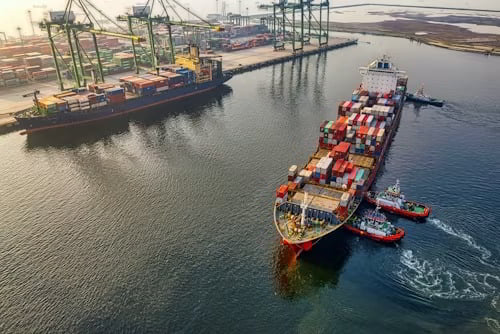
Since more than 80% of goods are transported by sea, it is without doubt true that shipping is the backbone of the world’s trade. It is the case that developing countries are also part of this effort as they depend on shipping almost as much as the developed world. Over 50% of both imports and exports from developing countries are carried via the sea.
Ports are therefore crucial to the growth of the industry, being gateways to the region that is linked to the coast. Supply chains are being created throughout the network.This expansion has to be tempered, keeping an eye on how shipping is affecting the climate around the globe.
This checking of how ships and ports are managed is already causing supply chains and ports themselves to consider their options when accepting extra traffic. Chokepoints are limiting the speed at which the process of transporting, loading and unloading can be carried out.
On the positive side, ports are creating infrastructure which will improve efficiency.Thesenew measures that are becoming available include enhanced digital solutions in the ports.
Ships are becoming greener and the maritime careers that depend on the industry are changing in that environmental concerns are among the top topics discussed when creating new roles in the shipping industry.
Ships may indeed carry the new fuels around the globe to complete the cycle. There will be stimulation in economic sectors such a s renewable energy and heavy industry to welcome in the new strategies.
This development will happen in three ways. Firstly, we will have greener shipping and ports. Currently shipping accounts for approx. 3% of greenhouse gases and unfortunately electrification will not be easily achieved although we may see ships run on other fuels such as green ammonia or methanol. The production of these sensitive fuels can, and will, be achieved around the globe once the infrastructure is in place. This will reduce the industry’s carbon footprint in an equitable and inclusive manner.
Secondly, digitalizing operations will bring about efficiency on shore, in ports, and onboard vessels themselves. Well organized management of operations allow for an interface that improves as the day-to-day activities are observed in ports as well as on-board ships. We will learn as we carry on. Digital solutions will therefore optimize port calls, reduce costs and lower emissions.
Of course, with new technological operations comes the possibility of cyber attacks and more emphasis will be placed on security in the implementation of up to the minute systems, making for a new generation of maritime career opportunities.
Thirdly there is an issue with improving efficiency. The World Bank’s client countries depend on low-cost maritime transport. Goods such as food, demanded by nearly every country around the world, rely on resilient supply chains and efficient movement through ports. This lowering of costs and operational effectiveness helps to create a healthy optimization of vessel operation with positive cost management and a beneficial climate impact.
You can watch how effective these measures are on the Container Port Performance Index (CCPI). This is the global benchmark for container port efficiency, published annually by the World Bank and S&P Global.
News Photos
The latest news on shopping malls - product promotions, celebrity visits, product launches, events for kids, band performances, DJ Nights, Festival Celebrations, Social Causes and more.
 |
Social Network
 |
 |
 |
 |
 |
Partner Sites